
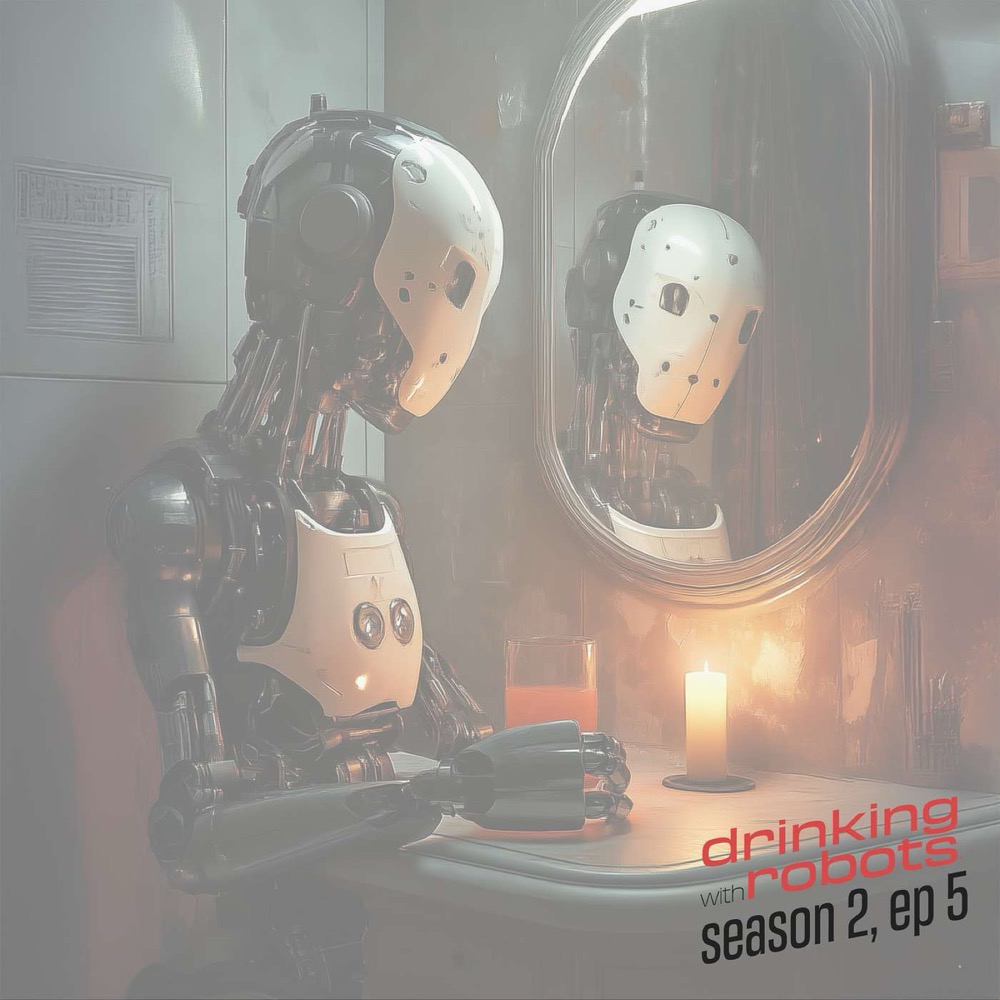
Ingrid once got an order for a Bloody Mary made with blueberry vodka. It didn’t come from a hipster trying to make a point. It came from a middle-aged guy in a nice shirt, the kind of customer you’d expect to order an Old Fashioned with Buffalo Trace. She made it. It was less terrible than you’d think, and she still wouldn’t recommend it to anyone.
That’s the Bloody Mary for you. It’s the one cocktail people feel free to rebuild from the ground up, and it’s been that way since before anyone could agree on who made the first one. For our National Bloody Mary Day episode (January 1, for reasons anyone who has been to a New Year’s party will understand), we went looking for the inventor, the Mary, and the biggest garnish we could find. We found a lot of garnish.
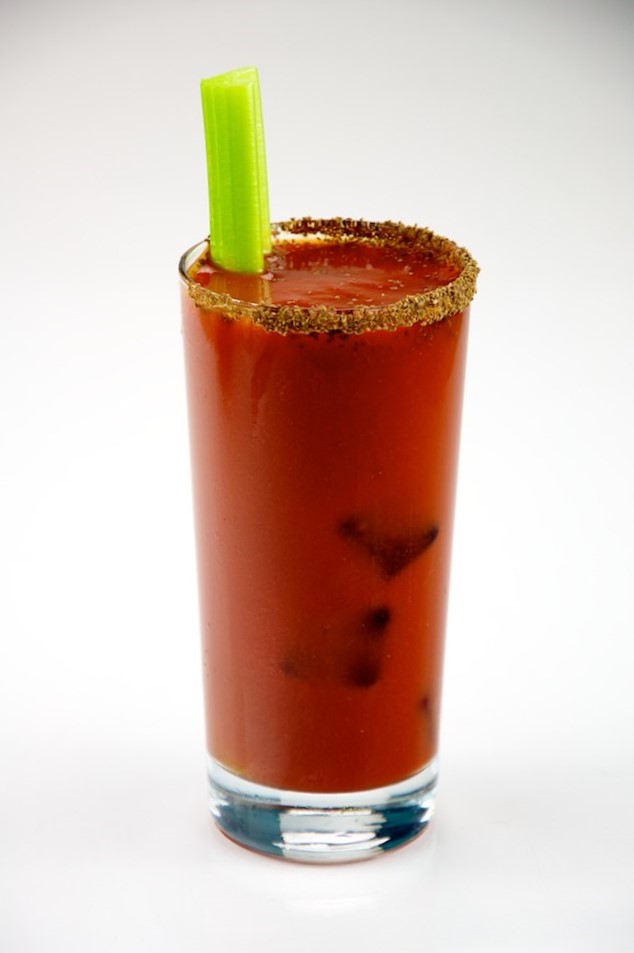
Who invented the Bloody Mary?
Probably Fernand Petiot, sometime between 1921 and 1934. The longer answer comes in three versions, and Petiot is in two of them.
Paris, early 1920s
The oldest story puts Petiot behind the bar at the New York Bar in Paris, which became Harry’s New York Bar after Harry MacElhone bought it in 1923. Around 1921, the story goes, he started mixing equal parts vodka and tomato juice. Vodka was new to Paris, carried there by Russians who had fled the revolution. Harry’s still claims the drink. One version of the naming has a customer saying it reminded him of a girl he’d met at a cabaret. Another has a woman named Mary who worked at a club called the Bucket of Blood.
New York, the 1930s
The second story belongs to the comedian George Jessel. A 1939 column by Lucius Beebe in the New York Herald Tribune credited Jessel with a new drink of half tomato juice and half vodka, and Smirnoff later put him in its Bloody Mary ads. New York’s 21 Club also has a claim, through a bartender named Henry Zbikiewicz.
The St. Regis, 1934
The third story brings Petiot back. He moved to New York in the mid-1920s and by 1934 was working the King Cole Bar at the St. Regis Hotel. The hotel’s version is that Serge Obolensky, a Russian prince, asked him to recreate a vodka drink he’d had in Paris, and Petiot gave it some backbone. Petiot described his recipe to The New Yorker in 1964: salt, black pepper, cayenne, Worcestershire, lemon juice, and cracked ice, along with the vodka and tomato. That’s the drink most bars still make. The hotel reportedly thought “Bloody Mary” was too crude for its guests and called it the Red Snapper. Nobody else did.
So who gets the credit? Petiot is in two of the three stories, and he’s the one who seasoned it. As for the name, every version has a Mary in it somewhere: a cabaret girl, a waitress, an actress, a queen. Ingrid compared it to a singer who tells every girlfriend the song was written about her.
The other Bloody Mary, the one in the mirror
Turn off the bathroom light, light a candle, look in the mirror, and say her name three times. Some versions say thirteen. Some add lines we won’t repeat here. Folklorists trace the game to an older custom: young women in Britain and America would look into a mirror in a dark room, often on Halloween, hoping to see the face of the person they’d marry. If they were fated to die unmarried, they’d see a skull. (We wrote more about Halloween fortune-telling in our history of Halloween.)
There’s a reason the game works. In 2010 the Italian psychologist Giovanni Caputo published a short study in the journal Perception. He sat 50 volunteers in front of a mirror in a room lit by one 25-watt bulb and had them stare at their own reflection. Within about a minute, most of them saw their face start to distort, and nearly half reported seeing something monstrous. He called it the strange-face-in-the-mirror illusion. Your brain is so set on finding faces that when it doesn’t have enough light to work with, it fills in the gaps itself.
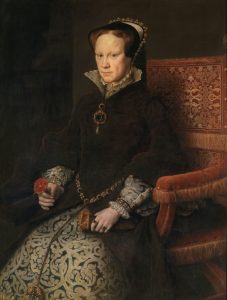
Who is the ghost supposed to be? The usual suspect is Mary I of England, Henry VIII’s daughter with Catherine of Aragon. She took the throne in 1553, had her Protestant rival Lady Jane Grey executed, and set about returning England to the Catholic Church. From 1555 until her death in 1558, close to 300 Protestants were burned at the stake. Her enemies made sure the nickname stuck, which is a little rich considering the records of her father and of her sister Elizabeth. Other candidates include a supposed witch named Mary Worth, for whom there’s no real evidence, and the Hungarian countess Elizabeth Báthory. None of them has anything to do with the cocktail beyond the name.
The Bloody Marys at the Blind Pelican
Our guest for this episode, Bri Scott, tends bar at The Blind Pelican in Holly Springs, North Carolina, about a mile from Ingrid’s house. If you spend any time on Instagram or TikTok, you may have seen their Bloody Marys. They go viral every so often.
It started small. The original garnish was celery and cucumber. Then bacon and shrimp. Then guests started asking whether the kitchen could add things, and the staff kept saying yes. Today the menu’s Medusa rings up at $100 and comes with shrimp, bacon, a grilled cheese, a lobster tail, a full pound of crab legs, and a six-ounce filet mignon.
That’s not the record. Bri helped build the biggest one the restaurant has ever sent out: a $2,024 Bloody Mary that started with 13 pounds of snow crab legs, carried most of the menu (some of it twice), and held well over 100 ounces of liquid. It fed 11 people visiting from Texas. They still couldn’t finish it, so they gave the staff the leftovers as a surf and turf. It took 30 minutes from the order to the table. When we asked how all of that stays on the glass, Bri said, “Faith.” Skewers help, and the crab legs make a good backstop.
Bri grew up in Holly Springs and started at the Blind Pelican in 2020, right out of high school, as a host. She moved up to running food, then serving, and asked the bartenders so many questions that she worked her first bartending shift the day after she turned 21. Before that she taught dance, which she’d studied since she was four, and she’ll tell you a busy bar is a partner dance. You learn where the other bartender is going to step before they step there.
The Pelican’s other big seller is a smoked Old Fashioned made with Woodford Reserve, a house orange syrup, orange-cinnamon bitters, and cherries soaked in Woodford for 90 days. North Carolina doesn’t make that kind of thing easy. Every infusion and every batched cocktail needs its own permit from the state ABC.
The challenge: a Bloody Mary with no tomato juice
We asked both competitors to take the Bloody Mary somewhere new without using tomato juice, while still getting tomato into the glass somehow.
The AI went minimalist, which is a strange thing to do with a Bloody Mary. It called for roasted tomato water, aquavit, a little fino sherry, aromatic bitters, lemon, and salt, stirred and served up in a Nick and Nora with a rim made from the dried tomato skins. The full spec is below.
Bri went the other way and built a Bloody Mary Mojito. She muddled cilantro in place of mint and lemon in place of lime, along with sun-dried and cherry tomatoes, then added vodka and a house vegetable juice seasoned with sriracha, A1, horseradish, celery salt, black pepper, Worcestershire, pickle juice, garlic, Cajun seasoning, brown sugar, and Pickapeppa sauce.
Our judge scores blind, with 50 points for taste, 30 for presentation, and 20 for originality. The AI won, 80 to 76. It took taste 37 to 34 and originality 16 to 14, and Bri won presentation 28 to 27. The judge liked the AI’s drink but found it too light to read as a Bloody Mary. Bri’s had the color and the savory punch of the real thing. We both thought the robot could have committed to a garnish. Bri says she’ll get it next time, and redemption episodes are in the works.
ChatGPT's Roasted Tomato Water Bloody Mary
Ingredients
- 3 oz roasted tomato water
- 1.5 oz aquavit
- 0.25–0.5 oz fino sherry
- 0.25 oz fresh lemon juice
- 2 dashes aromatic bitters
- 1 pinch salt
Garnish
A pickled cherry pepper on a skewer and fresh cracked black pepper
Instructions
- Rim a chilled Nick and Nora glass with ground dried tomato skins.
- Add the tomato water, aquavit, sherry, lemon juice, bitters, and salt to a mixing glass with ice.
- Stir until well chilled and strain into the glass.
- Garnish and finish with fresh cracked black pepper.
Notes
For the tomato water, roast halved ripe tomatoes until soft and browned, blend them, and let the purée drip through a coffee filter or cheesecloth in the fridge overnight. Don't press it or it turns cloudy. Dry the roasted skins in a low oven and grind them with a little salt for the rim.
Listen to the episode
“Turn off the lights and grab a bucket of blood with Bri Scott” is Season 2, Episode 5 of Drinking With Robots. Listen above, on Buzzsprout, or wherever you get your podcasts.
Follow Bri at @bri.scott and The Blind Pelican at @blindpelicanseafood. If you’re in Holly Springs, bring friends. Possibly ten of them.
For more drink origin stories, read The Fascinating Origins and Stories Behind Classic Drinks and where the word “cocktail” came from.
This episode was sponsored by Remedy Cocktail Company, makers of handcrafted cocktail bitters.