
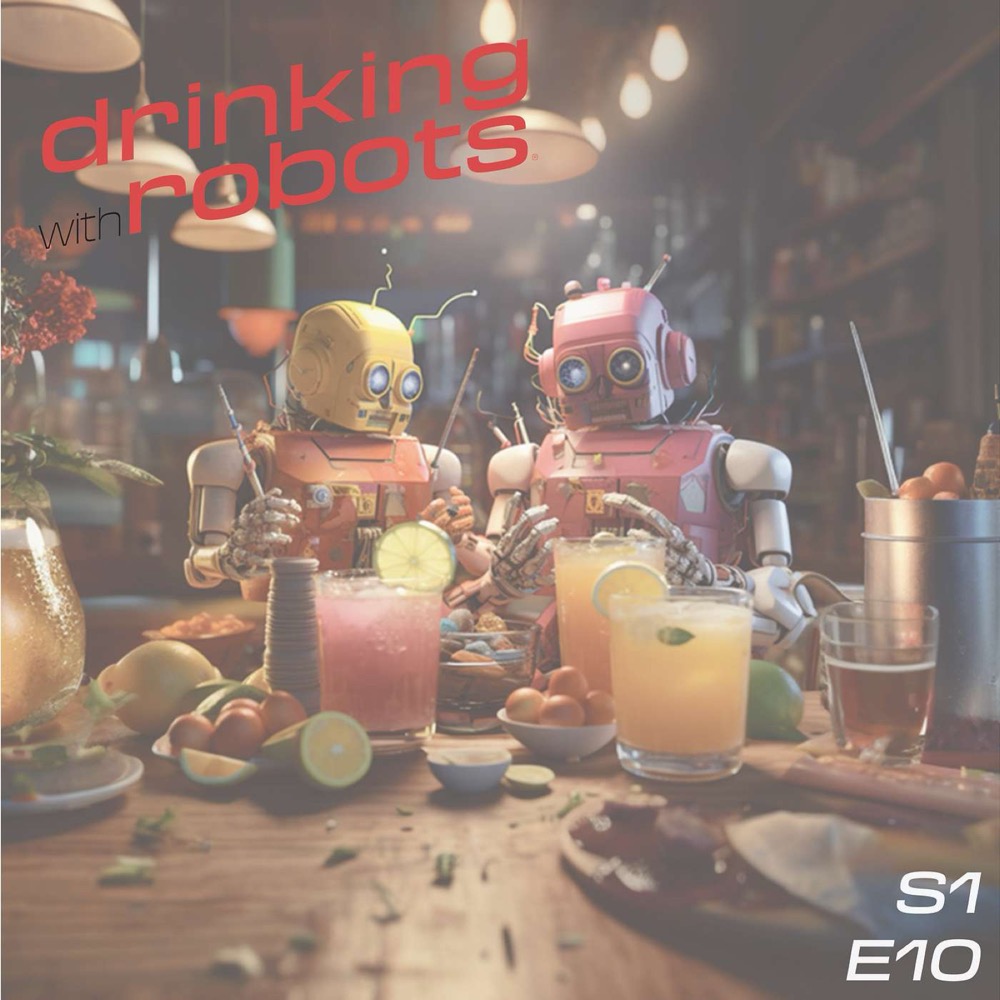
“I drank enough for all of us for a long time.” That’s how Ian Murray summed up his history with alcohol when we asked about the sober curious movement. Ian tends bar at Foundation in Raleigh, North Carolina. He got sober at about the same time a lot of people were starting to rethink their drinking, and he has spent the years since making alcohol-free drinks that can stand next to anything else on Foundation’s menu.
What “sober curious” actually means
Ruby Warrington brought the phrase into the mainstream with her 2018 book Sober Curious. The idea is to ask yourself why you’re drinking, even if you don’t think you have a problem. It isn’t the same thing as recovery, which is its own and far more serious path. It’s about drinking, or not drinking, on purpose.
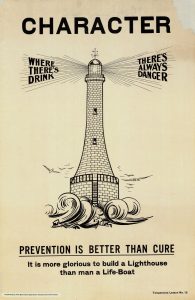
Questioning alcohol is nothing new. The temperance movement of the 1800s and early 1900s was a moral crusade with posters like this one, and in the US it ended in Prohibition. The modern version is gentler. It looks more like Dry January, which the British charity now called Alcohol Change UK launched in 2013, and like the idea that you can skip a month, a night, or a round without it having to become your whole identity.
Mindful mixology
The bar world’s side of this has a name too. In his 2022 book Mindful Mixology, Derek Brown argues that a cocktail is any sophisticated, flavorful drink for adults, with or without alcohol, and that a zero-proof drink isn’t a lesser one. That’s a long way from the mocktails Ian remembers from early in his career. “It was always just like juices and soda water,” he said. Usually with a decorative flower on top.
New bottles helped. Seedlip, the first widely sold distilled non-alcoholic spirit, launched at Selfridges in London in 2015 with 1,000 hand-labeled bottles, and Diageo bought the company in 2019. Ritual Zero Proof, Lyre’s, and dozens of others followed. You can make a zero-proof Negroni now.
Ian’s advice is to stop expecting these bottles to taste like the spirits on their labels. “You’re not going to take Ritual zero-proof whiskey and sip it neat and think it’s going to taste like Elmer T. Lee,” he told us. Treat them as ingredients in their own right, and build around them with shrubs, cordials, teas, and syrups.
The hardest thing to replace is the bite, the warmth and edge that alcohol gives a drink and juice can’t. A lot of zero-proof recipes lean on ginger, pepper, or bitter botanicals to fake it. For an alcohol-free amaro that pulls it off, listen to our episode with Kelly Casey of Pathfinder.
Why a zero-proof cocktail costs the same as one with booze
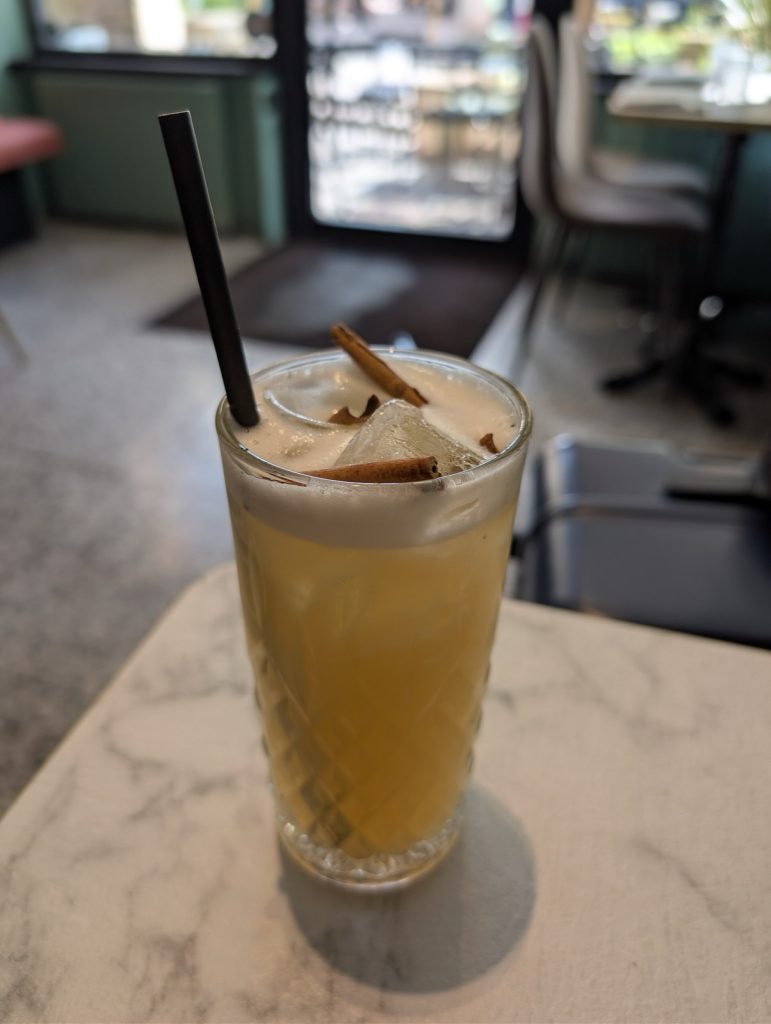
At Foundation, the spirit-free drinks are on the same menu as everything else, at the same $12 to $15, with the same markup. Ian doesn’t apologize for that, and as far as he knows, nobody has ever complained about it to anyone’s face. “People will argue the whiskey prices all the time,” he said.
The numbers back him up. A bottle of zero-proof spirit costs about the same as a mid-shelf liquor, somewhere between $30 and $50. House shrubs and cordials take more prep than pouring whiskey into a glass, and the bartender is putting the same skill into the drink either way. As Rob pointed out, going sober curious probably won’t save you money on a night out. You’ll just remember what you spent.
Plenty of the people ordering them aren’t sober. Ian sees a lot of guests alternate between a spirited drink and a spirit-free one. They can stay out longer and still drive home, and nobody at Foundation is going to give them a look for it.
How Ian builds a drink
Ian keeps notebooks, Moleskine after Moleskine going back to about 2012. A former boss recently handed him one he’d left behind eight years earlier, still full of recipes. He writes down drink names, flavor ideas, and things he sees on TV, “even if it’s just a name for a drink.” He works a bit like a stand-up comedian, always collecting material.
A lot of his drinks are named for the things he loves. Foundation’s menu has carried the Bowman Gray, named for the short track in Winston-Salem and made with Winston-Salem’s Sutler’s Gin, and he has made more than one version of a drink called the Charlie Hustle, for Pete Rose and his Cincinnati Reds. He’s upfront about his style: if you don’t like stirred, bitter, boozy drinks, nine times out of ten you won’t like his.
He took a long break from cocktail competitions because so many of the winning drinks were built for Instagram and couldn’t survive a busy Friday. He came back recently and took second place at a North Carolina competition that called for both a cocktail and a mocktail. His rule is to skip anything like a foam that takes seven hours to make, and to build drinks he’d be happy to make 700 times.
The challenge: an alcohol-free drink that feels like well-being
For this episode, we asked both competitors for an alcohol-free drink that would evoke well-being, mindfulness, and sophistication.
Ian reworked a drink he’d first put on a menu more than ten years ago at manna in Wilmington. He calls it the X AperiTEAvo X: a pun on aperitivo and tea, wrapped in X’s the way straight-edge hardcore bands write their names. It’s a “gin” sour built on Seedlip Garden 108 infused for a few hours with Earl Grey, plus Ritual’s zero-proof aperitif (its stand-in for Aperol or Campari), lemon, a 3:1 honey syrup, and egg white. He dry shakes it, shakes it again with ice, and finishes it with a few dots of cranberry bitters dragged through the foam with a spoon, so the first thing you smell isn’t egg.
The AI took about 30 seconds to come back with something it named Elysian Tranquility, and it landed very close to Ian’s drink: honey, egg white, floral notes, served up. Its lavender honey syrup even echoed the lavender in the Earl Grey that Ian infused into his Seedlip. “This thing is reading my brain,” he said.
The AI won, 82 to 77. Taste was close (38 to 37), originality tied at 15, and the AI took presentation 29 to 25. Our judge wrote that Ian’s egg white gave his drink “a great texture but perhaps mutes the flavors too much,” and that a bit more acidity would have made it more memorable. The AI’s drink had “a bit more of a bright note,” and she said she might have a second. A version of Ian’s drink with alcohol went onto Foundation’s next menu.
Near-misses like this happen on the show more than you’d think. In our drive-in movie episode, Ben Robbins and the AI built almost the same drink: bourbon, popcorn syrup, chocolate bitters, and cola. Ben topped his with cola. The AI called for a cola reduction and added lemon juice to cut the sweetness it was expecting. But reducing cola doesn’t make it sweeter. It turns herbal, and the lemon threw the whole drink off. Anyone who has made cola syrup knows that. Something without taste buds doesn’t.
Elysian Tranquility (ChatGPT's zero-proof sour)
Ingredients
- 1 oz lavender-infused honey syrup
- 1 oz fresh orange juice (we used Cara Cara)
- 0.5 oz fresh lemon juice
- 0.25 oz fresh lime juice
- 0.5 oz ginger syrup
- 1 egg white
- 2 dashes orange blossom water
Garnish
An edible flower
Instructions
- Add everything to a shaker and dry shake without ice to build the foam.
- Add ice and shake again until cold.
- Double strain into a chilled coupe or Nick and Nora glass.
- Garnish with an edible flower.
Notes
Lavender honey syrup: warm equal parts honey and water with about a tablespoon of dried culinary lavender per cup, steep 15 to 20 minutes, and strain. Rob's kids got a round of these when they got home from their first day of school.
Listen to the episode
“I’ve Drank Enough for Everyone with Ian Murray” is Season 1, Episode 10 of Drinking With Robots. Listen above, on Buzzsprout, or wherever you get your podcasts.
Follow Ian at @ian__murray and Foundation at @foundation_bar. Just don’t call it a speakeasy. “We’re not a speakeasy. We’re an underground bar,” Ian says. There’s a chalkboard sign and tables outside, and the staff wear Nikes and play the Clash.
This episode was sponsored by Remedy Cocktail Company, makers of handcrafted cocktail bitters.